
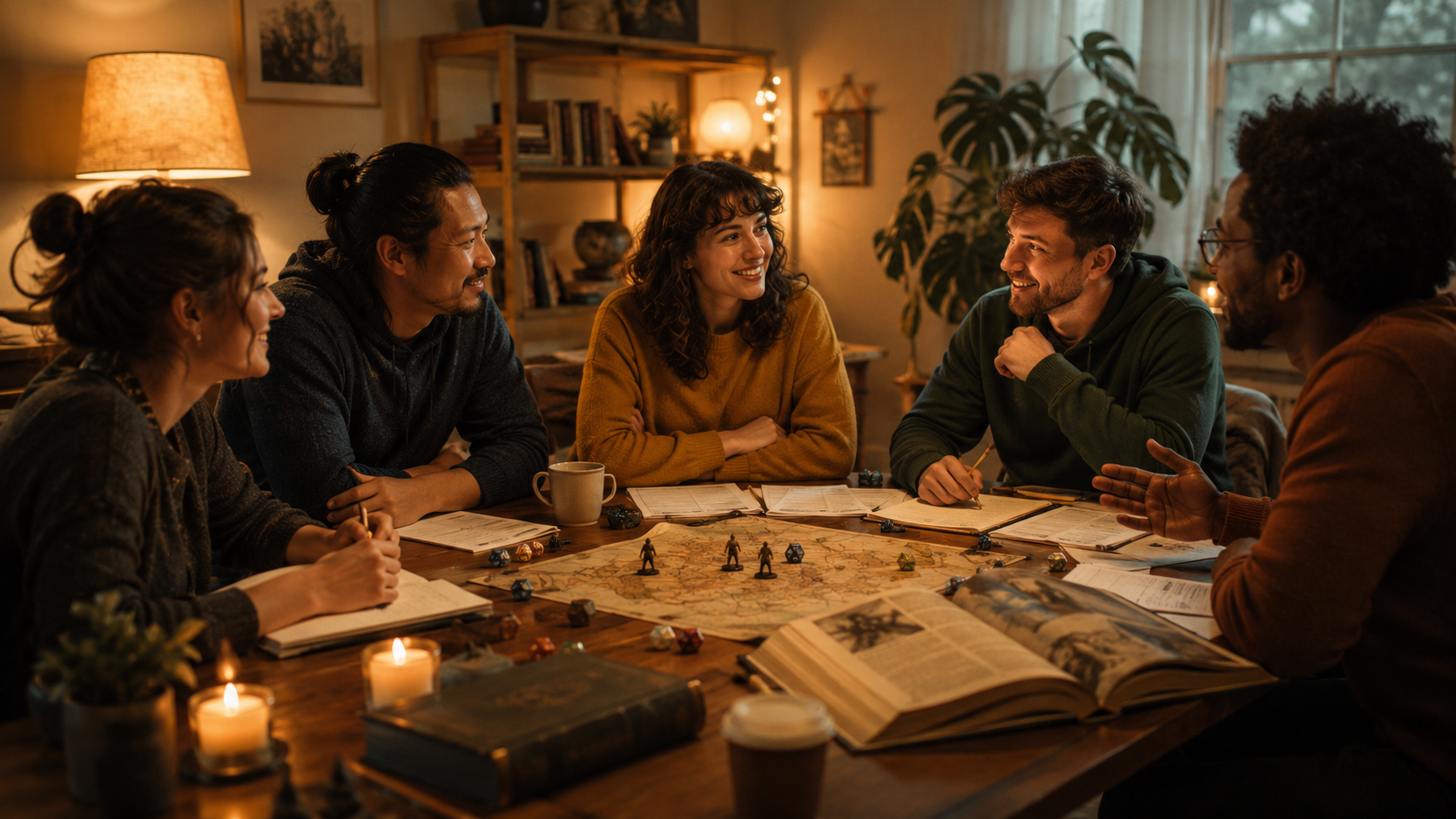
How roleplaying games can support mental health through stress relief, social connection, teamwork, and creative expression.
Tabletop RPGs and mental health may not seem connected at first glance. Most people see roleplaying games as a hobby, a social activity, or just something nerds do with dice, character sheets, and imagination.
But hobbies matter.
Playing tabletop RPGs can be a wonderful hobby. In truth, it is an art form itself, combining several creative aspects.
People don’t take it seriously because it’s a hobby. This includes many who play it.
When we think of a hobby, we generally don’t think of mental health. It’s just something that we do for pleasure.
Some people think hobbies are just a waste of time. Well, they would be wrong.
This article is a serious look at tabletop RPGs and mental health for actual players, GMs, parents, and people who care about the hobby.
I have talked about this before, but I want to present this is a slightly different frame for this post.
Many studies have concretely shown there are several mental health benefits to having a hobby. Tabletop RPGs fall into this category because of their combination of different elements from different hobbies.
In this article, I want to present five benefits, even though there are more, of playing tabletop RPGs that are valuable for a person’s mental health.
Tabletop RPGs and Mental Health Start With Stress Relief
Playing tabletop RPGs can potentially reduce stress in a couple of ways. The first is by simply reading the books.
Reading is a known stress reliever in a physical sense, lowering your blood pressure and your heart rate.

A 2009 study by Mindlab International at the University of Sussex, led by cognitive neuropsychologist Dr. David Lewis, found that reading for as little as six minutes reduced stress levels by up to 68%, lowering heart rate and easing muscle tension. Several health and reading-focused outlets cite this study when discussing reading as a stress-reduction activity.
In addition, taking part in the tabletop RPG hobby can potentially reduce the production of cortisol, the human stress hormone.
This is why I don’t like calling playing tabletop RPGs an escape. It conjures up in the mind a fight or flight response, which is tied to high levels of stress.
Playing tabletop RPGs should be considered a vacation where one can relax and lower their amount of mental stress, which affects their whole being.
And yes, in this situation, specificity of words matter.
That is one of the strongest connections between tabletop RPGs and mental health. The hobby gives the mind somewhere else to go without requiring a person to abandon responsibility, reality, or good sense.
Tabletop RPGs and Mental Health Include Fighting Loneliness
We are living in a time of epidemic loneliness and high suicide rates, especially among men. Tabletop RPGs are social hobbies.
Yes, you can play one solo, but they are not created with that dynamic in mind.
At its core, it encourages a group of people to gather regularly to engage in the hobby together.
That standing appointment gives a lonely person something to look forward to, which may lead to an increased sense of self-worth, which is a defense against loneliness.
The World Health Organization reported in 2025 that one in six people worldwide is affected by loneliness. The WHO also states that social connection is linked to better health and reduced risk of early death.
The WHO also reports that more than 720,000 people die by suicide every year, and suicide is the third leading cause of death among 15–29-year-olds globally. A game table is not a cure-all, but regular social connection is not nothing.
This is why tabletop RPGs and mental health belong in the same conversation. A good table can become a meaningful third place, especially for people who do not easily connect through sports, bars, work events, or other social spaces.
Tabletop RPGs Can Improve Social Interaction
Research has shown that participating in group activities helps to strengthen communication skills and build sound relationship connections with others.
Now, let’s be honest, there are not many people in the tabletop RPG community who are social flowers. Dare I say, many people in the tabletop RPG community are pretty socially inept.
However, the right group can make that less of a reality over time and help these people in social situations.
Having a social group of like-minded people someone can connect with, even on a virtual level, can strengthen social interaction.
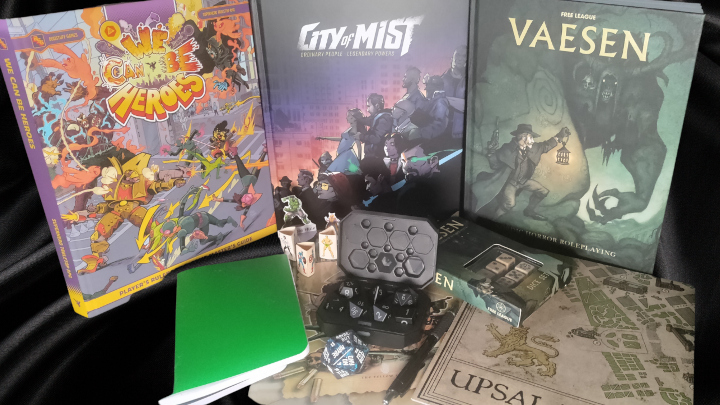
A 2024 scoping review on tabletop role-playing games as psychological interventions found that TTRPGs may promote cognitive and psychosocial skills, help prevent negative effects and stress, and support intervention in psychological problems.
The American Psychological Association has also reported that therapists are increasingly using tabletop role-playing games in clinical and group settings for issues such as anxiety, depression, ADHD, and social skill development. That does not make every session therapy, but it shows the structure of the hobby has genuine potential.
That makes tabletop RPGs and mental health practical, not theoretical. Players are not merely talking about imaginary scenes; they are listening, negotiating, taking turns, reading emotional cues, and learning when to speak and when to shut up.
Tabletop RPGs Requires Teamwork
Riding on the back of the previous benefit, playing tabletop RPGs can teach a person how to be part of a team, working together with others to accomplish a challenging goal in a positive way.
In addition, it exposes them in how to deal with setbacks, working within the framework of hearing other people’s perspectives.
Now, this is the reason RPG Elites won’t just play with any and everyone, because there are some people out there who are just not willing to play as part of a team, insisting on their way constantly, which has a negative effect on the teamwork dynamic.
This includes GMs who like to railroad their players.
This should be discussed out the gate so that team building becomes an enjoyable endeavor and not a source of new negative stress.
A 2024 study on the-game-I-refuse-to-mention-by-name (the most popular game in the space) and mental health found significant decreases in depression, stress, and anxiety, along with increases in self-esteem and self-efficacy among participants. That lines up with what serious players already know: a healthy table gives people a structured way to take risks, cooperate, fail, adapt, and try again.
This is where tabletop RPGs and mental health become very concrete. The game gives players practice at doing hard things with other people in a low-stakes environment.
For more on why table standards matter, this would be a good place to internally link to your RPG Elite Philosophy material or a “Roleplay Required” article.
Tabletop RPGs Encourage Creative Expression
Most people don’t know what they are capable of until they try something.
Tabletop RPGs give several ways to express oneself with role playing. Through this, people can discover not only their capability at role playing, but the extent of their creativity in that vein.
So they may find that they’re good mid-level or high-level role players, or they enjoy writing stories about their characters and just writing stories in general.
Or maybe they might find out that they like drawing, or it could be that the thing that they like to read are tabletop RPG source books and core books.
Stifling or downplaying this, usually done by emotionally stunted or creatively challenged people in the hobby, encourages people to retreat back to the place that they are attempting to take a vacation from.
By encouraging expression and experimentation, it allows a person to develop a sense of self-confidence, which affects their lives once they leave that tabletop RPG session.
A large international study published in Nature Medicine found that hobby engagement was associated with fewer depressive symptoms and higher levels of health, happiness, and life satisfaction among older adults across multiple countries.
That gives tabletop RPGs and mental health one more bridge. This hobby combines reading, social connection, imagination, performance, writing, problem solving, and shared memory.
Final Thoughts Concerning Tabletop RPGs and Mental Health
Tabletop RPGs are not professional counseling. They are not a replacement for medical care, therapy, counseling, pastoral care, or crisis intervention.
But they can be a meaningful part of a healthier life.
They are not therapy, but they can be therapeutic. This is the crossroads where tabletop RPGs and mental health connect. They can give people a place to read, think, create, laugh, talk, listen, cooperate, and belong.
That is not nothing.
For some people, a tabletop RPG session is just a game.
For others, it may be the one standing appointment on the calendar that helps them make it through the week.
So I wonder.
I wonder how many people could benefit from a supportive and healthy group of tabletop RPGers who meet regularly.
Would it help them lower their stress? Would it help them fight loneliness? Would it help them communicate better, build confidence, and express themselves in a positive way?
I wonder.
That is why tabletop RPGs and mental health should not be treated as some strange, fringe conversation. It is a real conversation about hobbies, people, imagination, and the value of having a good table.

